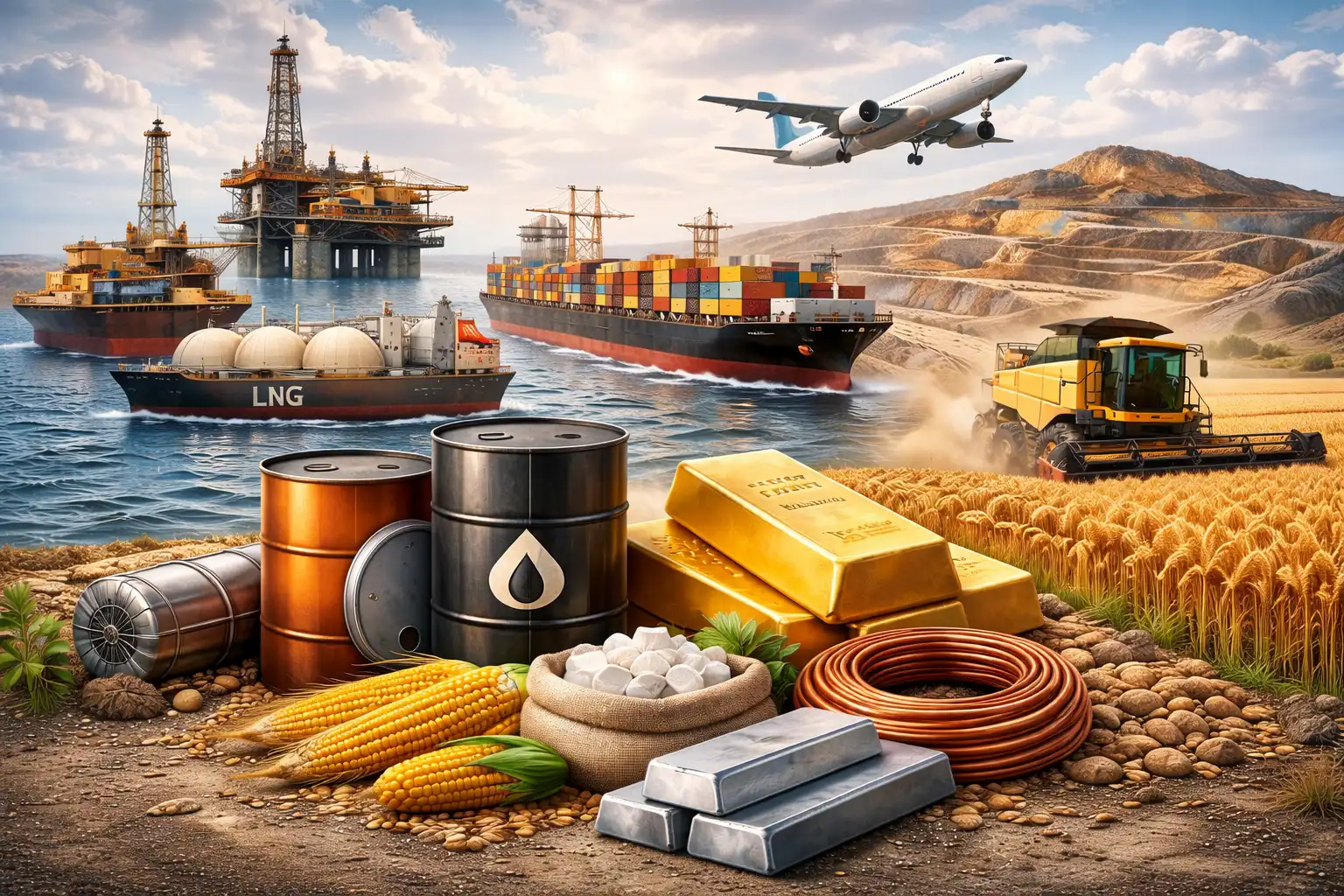
Global commodity trading plays a critical role in the world economy. From the fuel that powers transportation to the grains that feed populations, commodities are essential resources traded daily across international markets. Oil, gas, metals, and agricultural products form the backbone of global trade, linking producers, brokers, and buyers across continents.
Understanding how commodity trading works provides insight into the systems that ensure industries remain supplied with the raw materials they need.
Commodity trading refers to the buying and selling of raw materials or primary agricultural products. These commodities are typically standardised and interchangeable regardless of origin. They are traded through physical transactions, long-term supply contracts, and financial markets.
Commodities are generally divided into two major categories:
1. Hard Commodities
These include natural resources that are mined or extracted.
Examples include:
2. Soft Commodities
These include agricultural products that are grown or cultivated.
Examples include:
Global commodity markets allow these resources to move efficiently from producing regions to areas of demand.
Commodity trading involves a network of specialised participants working together to move goods across the global supply chain.
Producers
Producers are companies or organisations responsible for extracting or growing commodities. Examples include oil producers, mining companies, and agricultural farms.
Buyers
Buyers typically include manufacturers, refineries, food producers, and governments that require large quantities of raw materials.
Commodity Brokers and Trading Firms
Brokers and trading companies act as intermediaries, connecting buyers with reliable suppliers. They negotiate pricing, manage contracts, and coordinate logistics to ensure smooth transactions between parties.
Logistics and Shipping Providers
Once a deal is agreed, commodities must be transported across international supply chains. Shipping companies, storage facilities, and port operators play a major role in the delivery process.
Oil and gas are among the most actively traded commodities in the world. These energy resources power industries, transportation, and electricity generation.
Crude oil is typically extracted in producing regions such as the Middle East, North America, and parts of Africa. It is then transported via pipelines, tankers, or rail to refineries where it is processed into products like gasoline, diesel, and jet fuel.
Natural gas follows a similar process but may be transported as liquefied natural gas (LNG) for international shipping.
Prices are influenced by several factors, including:
Because energy markets are so large, oil and gas trading has a significant impact on global economic stability.
Metals are essential for infrastructure, manufacturing, and technology. Industrial metals such as copper, aluminium, and steel are used in construction, electronics, and transportation.
Precious metals such as gold and silver also serve as financial assets and stores of value during times of economic uncertainty.
Metal prices fluctuate based on:
Global trading networks ensure metals are supplied to industries where they are needed most.
Agricultural commodities are vital for global food security. Products such as grains, sugar, and oilseeds are traded in large volumes to support growing populations and food manufacturing industries.
For example, ICUMSA 45 refined sugar is widely traded internationally due to its purity and suitability for large-scale food production.
Agricultural commodity markets are influenced by factors such as:
Because agricultural supply can vary year to year, commodity trading helps stabilise markets and ensure consistent supply.
Commodity prices are driven by a combination of physical supply and demand as well as financial market activity.
Major pricing influences include:
Many commodities are also traded on international exchanges, where futures contracts allow businesses to hedge against price volatility.
Commodity trading is essential for maintaining a stable and efficient global supply chain. It enables resources to move from regions with abundant supply to areas with high demand.
Without these global trading networks, industries would struggle to access the materials required for manufacturing, energy production, and food supply.
By connecting producers, buyers, and logistics providers, commodity trading companies play a crucial role in supporting international commerce and economic growth.
Global commodity trading is a complex but essential system that powers industries and economies around the world. From energy resources like oil and gas to metals and agricultural products such as grains and sugar, commodities underpin modern life.
As global demand continues to grow, efficient and transparent commodity trading will remain a key component of international trade and economic development.

